

The Hopeless Quest for the Romantic Ideal

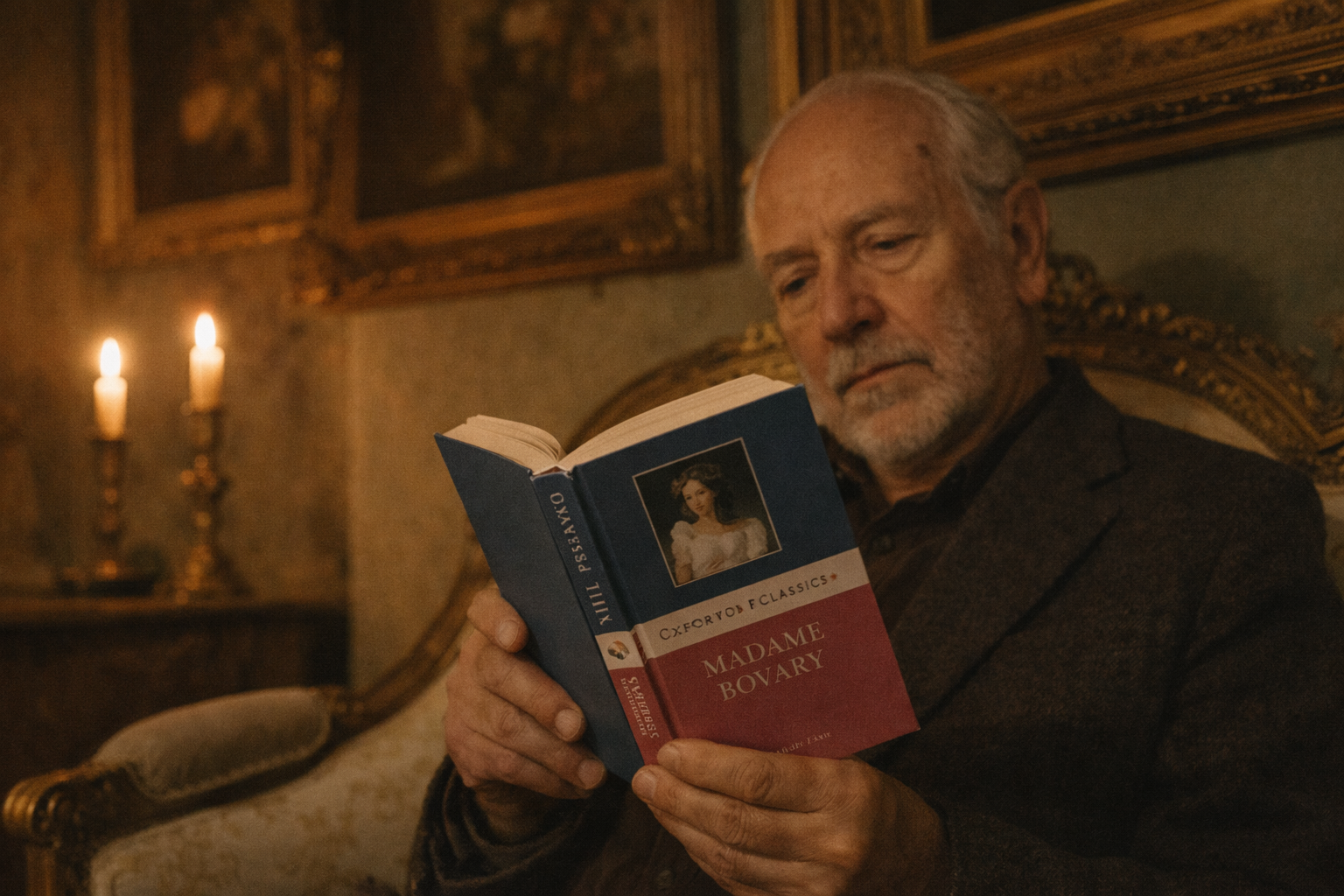
Discover Gustave Flaubert’s “Madame Bovary”, a captivating exploration of romantic illusion and the desperate search for escape from the boredom of bourgeois life. A masterpiece of realist literature that questions the female condition and human aspirations.

Introduction

“Madame Bovary” is a novel by Gustave Flaubert, first published in 1857. The work, which was the subject of much controversy on its release, is today considered a masterpiece of world literature. Flaubert tells the story of Emma Bovary, a young woman from the French provincial bourgeoisie, whose romantic dreams and aspirations for a more exciting life lead her to disillusionment and tragedy. The novel is an acerbic critique of 19th-century bourgeois society, with a particular focus on the status of women.

Summary and structure

The novel follows the life of Emma Bovary, married to Charles Bovary, a simple, devoted country doctor. Dissatisfied with her marital and rural life, Emma seeks to escape boredom through adulterous affairs and a lifestyle beyond her means, bringing her family to ruin. The novel’s structure is linear, with omniscient narration offering a penetrating look at the characters and society.

Themes and analysis

In “Madame Bovary”, Flaubert explores the themes of boredom, the desire to escape, romantic illusion and disillusionment. The novel is a critique of the bourgeoisie and its values, showing how boredom and the desire for a different life can lead to destruction. Flaubert meticulously examines the psychology of Emma, a woman who rebels against the limits of her condition, but whose attempts to escape reality only accentuate her personal tragedy. 

Flaubert’s realism, characterized by its precision in describing details and social environments, faithfully depicts the complexity of human emotions and the consequences of our choices. “Madame Bovary” also questions the role of women in 19th-century society, offering a critical view of how female aspirations are constrained by social structures and gender expectations.


Characters and development

Emma Bovary is one of literature’s most complex and controversial characters. Her quest for a passionate life, influenced by her romantic reading, leads her into a cycle of excitement and despair. Charles Bovary, her husband, embodies complacency and an inability to understand Emma’s deepest desires. Secondary characters such as Rodolphe and Léon, Emma’s lovers, play key roles in the evolution of the plot and the deconstruction of Emma’s illusions.

Impact and reception

When it was published, “Madame Bovary” was a scandalous success, leading to a trial for outrage against public decency, from which Flaubert was acquitted. Since then, the novel has been recognized for its impeccable literary style, its innovative approach to realism, and its profound influence on modern literature. “Madame Bovary” established Flaubert as a major figure in the realist novel, admired for his narrative technique and his ability to create characters of great psychological depth.

Why read this book?

“Madame Bovary” is essential reading for anyone interested in the study of literature and the human condition. The novel offers a timeless reflection on the dangers of romantic illusion and the devastating consequences of dissatisfaction. Reading “Madame Bovary” is also an exploration of Flaubert’s stylistic mastery, his art of detail and his ability to paint complex psychological portraits with empathy and precision.

Understanding the social dynamics and gender constraints of the time also sheds light on contemporary challenges, making “Madame Bovary” a work both rooted in its time and surprisingly modern in its themes.

Conclusion

“Madame Bovary” remains a pillar of world literature, a novel that continues to fascinate and provoke. Emma Bovary’s story, with its tragic quest for meaning and fulfillment, still resonates today, testifying to Flaubert’s genius and his lasting influence on the modern novel. It’s essential reading for anyone seeking to understand the complexity of the human soul and the intricacies of the heart.

Latest Reviews & Analyses
Guillaume Musso’s “Afterwards…” (Et après…)

Explore "Afterwards..." by Guillaume Musso, a captivating novel that interweaves suspense, love and existential questions. Discover how this book questions the meaning of life and the possibility of a new beginning. Introduction "Afterwards..." (Et après...) is a...

“Le Premier jour du reste de ma vie” (The First Day of the Rest of My Life) by Virginie Grimaldi

Discover "Le Premier jour du reste de ma vie" by Virginie Grimaldi, a captivating novel about friendship, love and rebirth. A moving and inspiring story that celebrates the strength of the human spirit. Introduction First published in 2015, "Le Premier jour du reste...

“If Only It Were True” (Et si c’était vrai…) by Marc Levy 

Dive into the world of Marc Levy's "If Only It Were True", a touching love story that defies the boundaries of reality. Discover a novel that awakens the imagination and celebrates the transcendent power of love. Introduction "If Only It Were True" (Et si c'était...

“The Salt Eaters” by Toni Cade Bambara

Explore "The Salt Eaters" by Toni Cade Bambara, a captivating novel about healing, activism, and community. Discover why this masterpiece remains a must-read for understanding resilience and transformation. Introduction "The Salt Eaters", published in 1980, is an...

“Snow Country” by Yasunari Kawabata

Explore "Snow Country" by Yasunari Kawabata, a poignant novel that blends love, solitude and the quest for beauty in the wintry setting of Japan. Discover why this work is a jewel of Japanese literature. Introduction "Snow Country" (雪国, Yukiguni) is a masterpiece of...

“My Name is Red” by Orhan Pamuk

Immerse yourself in Orhan Pamuk's "My Name is Red", a masterpiece that explores art, identity and love in Ottoman Istanbul. Discover why this captivating novel is a must-read for lovers of literature. Introduction "My Name is Red", a novel by Turkish writer Orhan...

“Manon Lescaut” by Antoine François Prévost

Discover "Manon Lescaut" by Abbé Prévost, a classic of French literature that explores love, freedom and destiny through a passionate and tragic story. A must-have for fans of great literary works. Dive into our analysis of "Manon Lescaut", Prévost's masterpiece that...

Franz Kafka’s “The Trial”

Immerse yourself in Franz Kafka's "The Trial", a captivating novel that explores the themes of absurdity, justice and isolation through the story of a man confronted by an opaque judicial system. An essential work for understanding the modern human condition....

“I Know Why the Caged Bird Sings” by Maya Angelou

Explore Maya Angelou's "I Know Why the Caged Bird Sings", a powerful autobiography that tackles racism, trauma and the quest for freedom through the eyes of a young African-American girl. An essential classic for understanding resilience and empowerment. Introduction...

“Fictions” by Jorge Luis Borges

Discover "Fictions" by Jorge Luis Borges, a collection of groundbreaking short stories that challenge reality through themes such as infinity, labyrinths and the nature of time. A must-have for lovers of profound and philosophical literature.  Introduction "Fictions"...

Zadie Smith’s “White Teeth”

Explore Zadie Smith's "White Teeth", a captivating novel that weaves themes of identity, multiculturalism and destiny through the intertwined stories of two families in London. Discover why this masterpiece remains a must-read for understanding modern society....

Fyodor Dostoyevsky’s “The Brothers Karamazov”

Explore Fyodor Dostoyevsky's "The Brothers Karamazov", a masterful work that delves into the moral and spiritual dilemmas at the heart of human existence. Discover why this timeless classic remains essential for those in search of profound understanding. Introduction...

Virginia Woolf’s “Mrs. Dalloway”

Immerse yourself in Virginia Woolf's "Mrs. Dalloway", a captivating exploration of consciousness and the complexity of life through the characters' stream of thoughts. Discover why this modernist masterpiece remains essential to understanding the depth of human...

Albert Camus’s “The Stranger”

Immerse yourself in Albert Camus' "The Stranger", a captivating exploration of the absurdity of life and human alienation. Discover why this existentialist masterpiece remains a must-read for anyone seeking to understand the complexity of existence. Introduction "The...

Ernest Hemingway’s “The Sun Also Rises”

Explore Ernest Hemingway's "The Sun Also Rises", a masterpiece about the lost generation of the post-World War I era. Discover how this iconic novel addresses the quest for meaning in a changed world. Introduction "The Sun Also Rises", Ernest Hemingway's first novel...

Stay Updated with Our Latest Reviews

Join our community to receive exclusive insights and updates on groundbreaking literary works.

Find Your Next Literary Adventure

What Our Readers Are Saying

Sophia Lee

“A captivating collection of reviews that inspire and inform. Highly recommended for avid readers!”

Subscribe To Our Newsletter

Join our mailing list to receive the latest news and updates from our team.

You have Successfully Subscribed!

Pin It on Pinterest

Share This